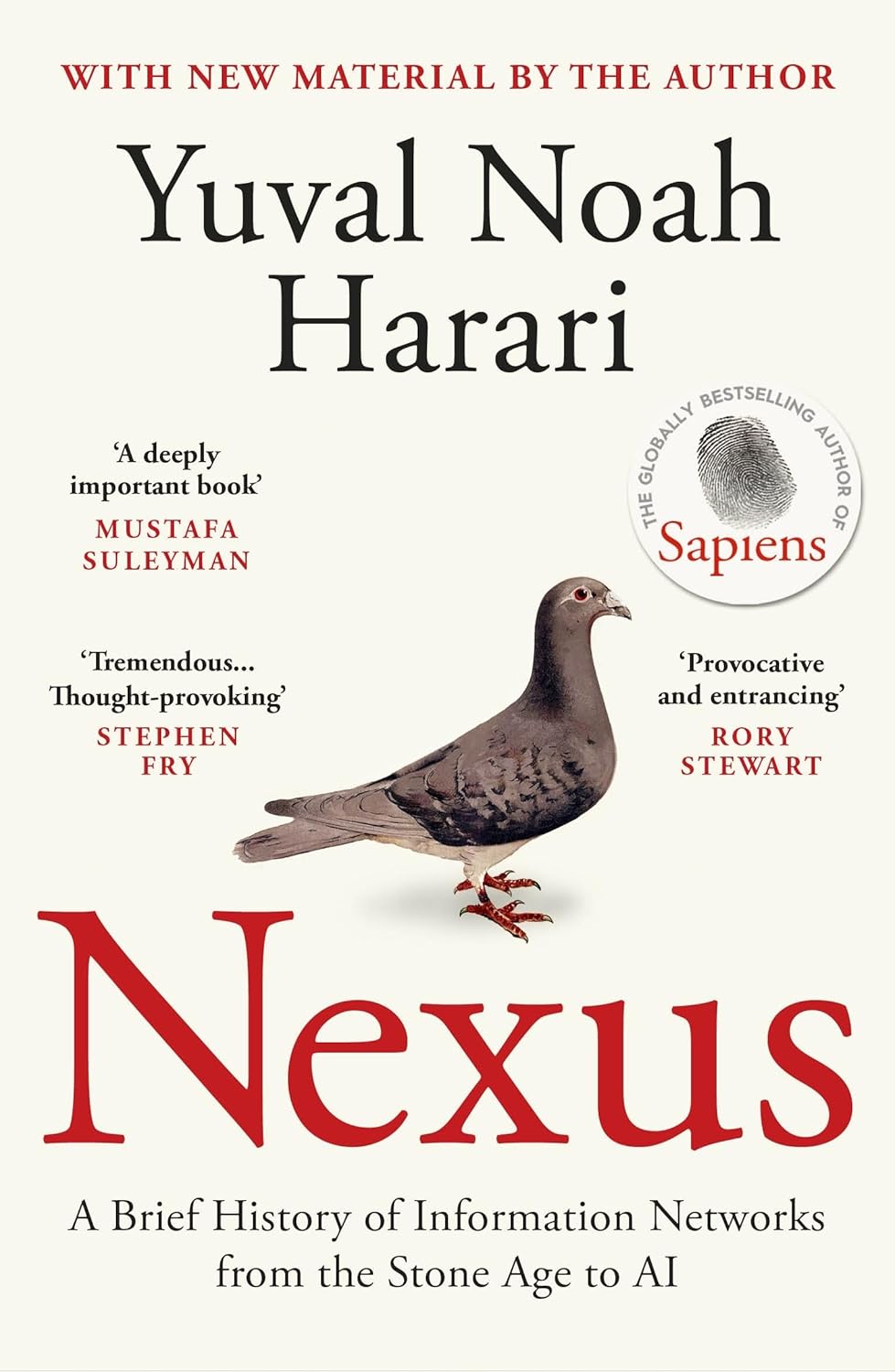
Nexus: A Brief History of Information Networks from the Stone Age to AI
From the author of Sapiens comes a sweeping exploration of how information networks have shaped human history — and how AI is creating the most profound transformation yet. Yuval Noah Harari traces the journey from stone tablets to the internet to artificial intelligence, revealing how societies have been built on shared stories and how new technologies threaten to unravel the fabric of democracy. A timely and urgent look at the crossroads we face.
Key Ideas
Humans have always lived in a dual reality: the objective reality of rivers, trees, and lions, and the imagined reality of gods, nations, and corporations.
As an Amazon Associate, I earn from qualifying purchases.
Notable Quotes
Humans have always lived in a dual reality: the objective reality of rivers, trees, and lions, and the imagined reality of gods, nations, and corporations.
Information is not the same as truth. In fact, information has often been the enemy of truth.
The greatest threat posed by AI is not that it will create a dictatorship of machines, but that it will enable new forms of human tyranny.
To understand where AI is taking us, we first need to understand how information networks have shaped our past.
When information becomes cheap, attention becomes the scarce resource — and the power to capture attention becomes the ultimate form of control.
The stories we tell ourselves about AI will shape the AI we end up with.
The printing press made the Reformation possible; the internet made the information revolution possible; AI may make the end of human history as we know it possible.
You may also like