← All reading paths
Innovation Managers
Innovation Manager Reading Path
Build the skills to drive innovation inside established organisations. Learn how to navigate disruption, manage change, and create cultures where new ideas thrive.
Outcome: Understand disruptive innovation, manage change, build creative cultures.
Books in this path (13)
1
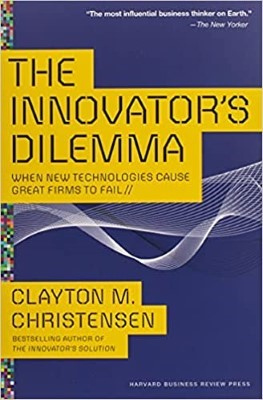
The Innovator's Dilemma
Clayton Christensen, 2016
- Offering both successes and failures from leading companies as a guide, The Innovator's Dilemma gives you a set of rules for capitalizing on the phenomenon of disruptive innovation
2
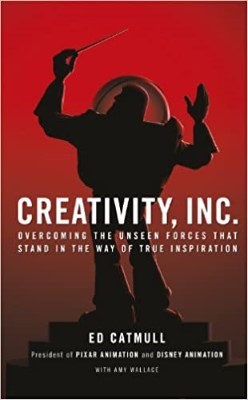
Creativity Inc
Ed Catmull, 2014
- is a book for managers who want to lead their employees to new heights - a manual for anyone who strives for originality, with behind-the-scenes examples from Pixar itself
3
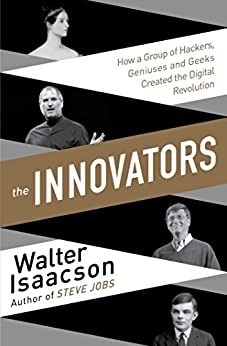
The Innovators
Walter Isaacson, 2015
- he Innovatorsis Walter Isaacson's story of the people who created the computer and the Internet
- It is destined to be the standard history of the digital revolution and a guide to how innovation really works
4
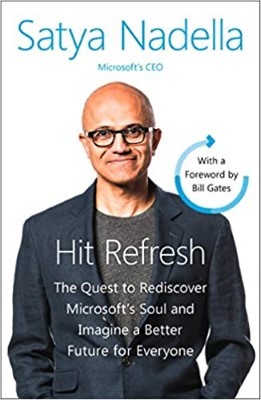
Hit Refresh
Satya Nadella, 2018
- But as management guru Peter Drucker once said, Culture eats strategy for breakfast.
- Our industry does not respect tradition. What it respects is innovation.
5
Originals
Adam Grant, 2017
- In the deepest sense of the word, a friend is someone who sees more potential in you than you see in yourself, someone who helps you become the best version of yourself.
- Argue like you're right and listen like you're wrong.
6
The Coming Wave
Mustafa Suleyman, 2023
- From the written word to sailing vessels, technology increases interconnectedness, helping to boost its own flow and spread. Each wave hence lays the groundwork for successive waves.
- Invention is a cumulative, compounding process. It feeds on itself.
7
How Big Things Get Done
Bent Flyvbjerg,Dan Gardner, 2023
- We're good at learning by tinkering-which is fortunate, because we're terrible at getting things right the first time.
- Small is good. For one thing, small projects can be simple.
8
The Infinite Game
Simon Sinek, 2020
- Leaders are not responsible for the results, leaders are responsible for the people who are responsible for the results. And the best way to drive performance in an organization is to create an environment in which information can flow freely, mistakes can be highlighted and help can be offered and received.
- To ask, What's best for me is finite thinking. To ask, What's best for us is infinite thinking.
9
The Culture Map
Erin Meyer, 2014
- Trust is like insurance-it's an investment you need to make up front, before the need arises.
- When interacting with someone from another culture, try to watch more, listen more, and speak less.
10
No Rules Rules
Reed Hastings,Erin Meyer, 2020
- If you give employees more freedom instead of developing processes to prevent them from exercising their own judgment, they will make better decisions and it's easier to hold them accountable.
- The Fearless Organization, she explains that if you want to encourage innovation, you should develop an environment where people feel safe to dream, speak up, and take risks. The safer the atmosphere, the more innovation you will have.
11
Co-Intelligence: Living and Working with AI
Ethan Mollick, 2024
- AI is not a tool you use. It is a collaborator you work with.
- The question is not what AI can do, but what AI can help us become.
12
Life 3.0: Being Human in the Age of Artificial Intelligence
Max Tegmark, 2017
- The real risk with AGI isn't malice but competence. A superintelligent AI will be extremely good at accomplishing its goals, and if those goals aren't aligned with ours, we're in trouble.
- AI is not good or bad by itself. It's a tool. It's up to us how we use it.
13
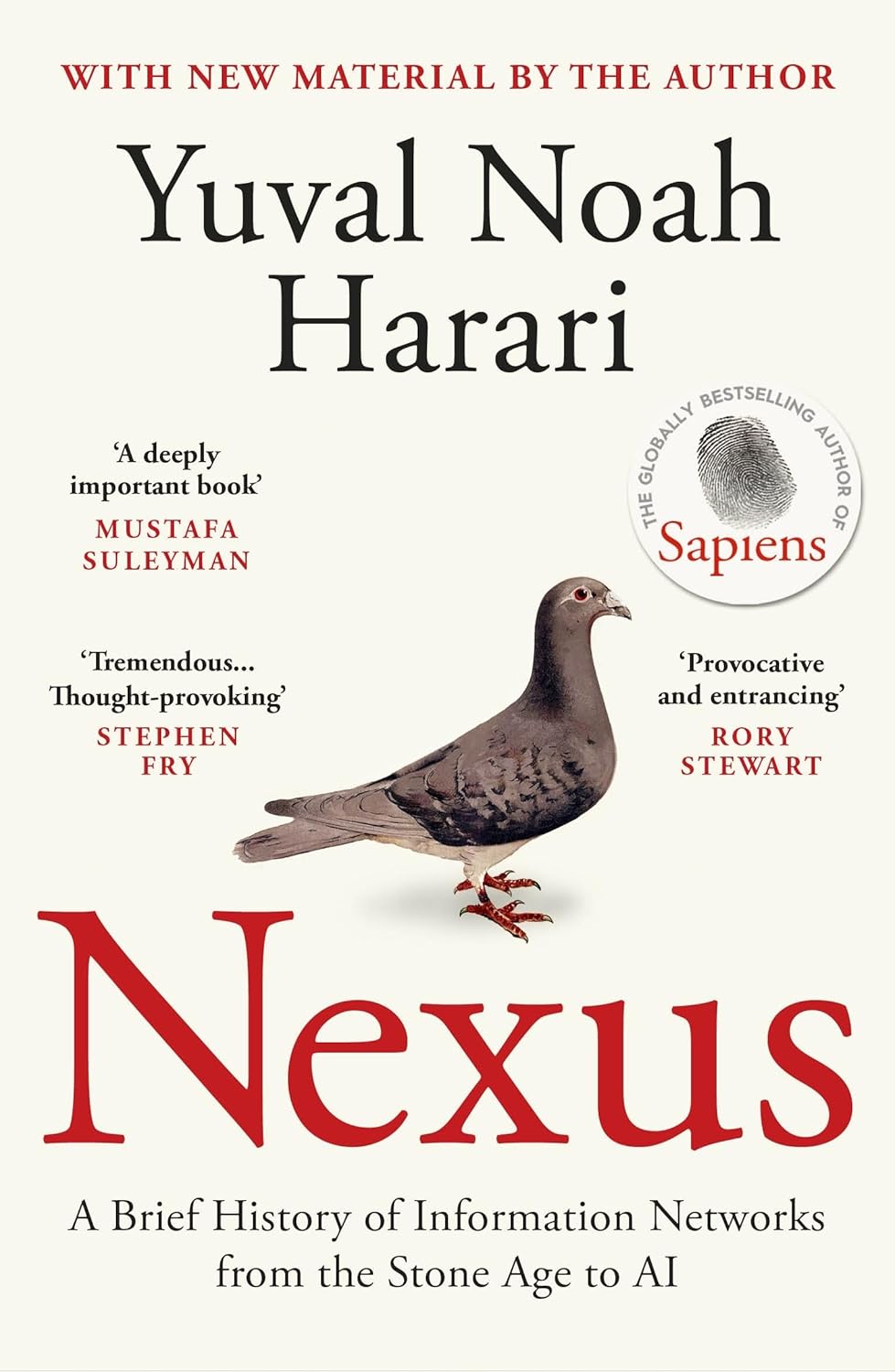
Nexus: A Brief History of Information Networks from the Stone Age to AI
Yuval Noah Harari, 2024
- Humans have always lived in a dual reality: the objective reality of rivers, trees, and lions, and the imagined reality of gods, nations, and corporations.
- Information is not the same as truth. In fact, information has often been the enemy of truth.